-www.svg)
-www.svg)
Researchers and their journey to Denmark
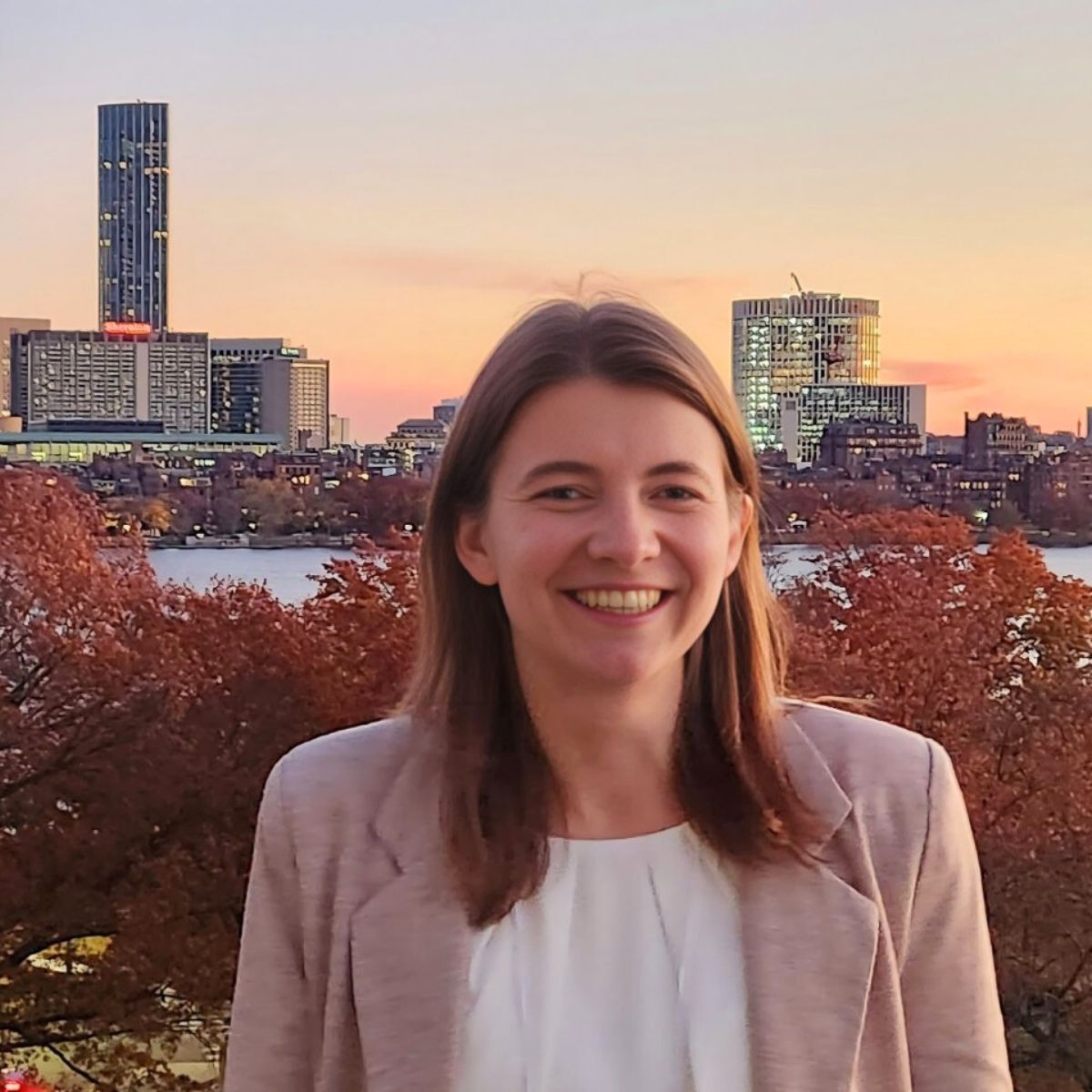
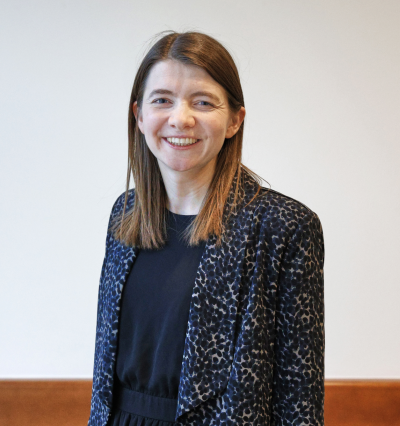
Meet Antonia Herzog
Assistant Professor at the Technical University of Denmark DTU
When Antonia met the Science Hub Denmark team at a MIT event in Boston, she was already in the middle of an important decision.
She had been invited to interview at the Technical University of Denmark (DTU) and was considering her next step, with opportunities in the United States, Germany, and Denmark.
The conversations she had that day did not define her choice. But they helped make it clearer what building a research career in Denmark could look like.
Today, Antonia is an Assistant Professor at DTU Chemistry, where she develops electrocatalytic technologies that use renewable energy to produce essential chemicals more sustainably.
Daniel Rasmussen

Private
From fundamental science to real-world impact
Antonia’s journey into research began in Berlin, where she completed her PhD at the Fritz Haber Institute of the Max Planck Society. Her work focused on using renewable electricity to convert CO₂ into fuels and chemicals.
What motivates her is understanding how reactions happen at the smallest scale. The point where molecules meet and new bonds are formed. Because that is where more efficient and sustainable processes can be designed.
She later continued her research at MIT, focusing on electrochemical ammonia synthesis, a process central to fertiliser production and global food systems.
Across both experiences, her direction became clear. She wanted to connect fundamental insights with practical applications that can be scaled and used in the real world.
Her work has already been recognised with several competitive grants, including the Villum Young Investigator Grant, supporting her in building her own research group.
DTU

Why Denmark stood out
For Antonia, choosing Denmark came down to both the research environment and the people behind it.
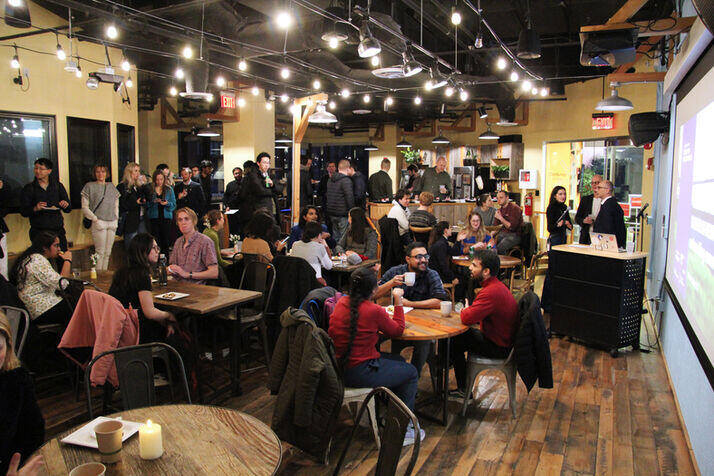
Around the same time as her DTU interview, Antonia attended a presentation by Science Hub Denmark at MIT. The timing gave her a chance to ask questions and get a clearer picture of what building a research career in Denmark actually looks like.
It helped her understand what to expect, both professionally and personally.
She was already considering Denmark, but the conversations made the opportunity feel more concrete and easier to navigate. Together with the openness she experienced from Danish colleagues, it gave her the confidence to take the next step.
“At DTU, there is a strong culture of collaboration.
You work across disciplines, and there is a close connection to industry.”

“At DTU, there is a strong culture of collaboration.
You work across disciplines, and there is a close connection to industry.”
Building a future in Denmark
At DTU, Antonia focuses on sustainable electrosynthesis. Her goal is to develop new ways of producing essential chemicals using renewable energy instead of fossil resources.
At the same time, she is building her own research group and shaping an environment where curiosity and collaboration go hand in hand.
For her, Denmark offers more than a place to work. It offers a setting where research connects closely to real-world challenges.
And that is exactly what she was looking for.
DTU



Feel inspired?
Do it like Antonia and let your next
career move be in Denmark.